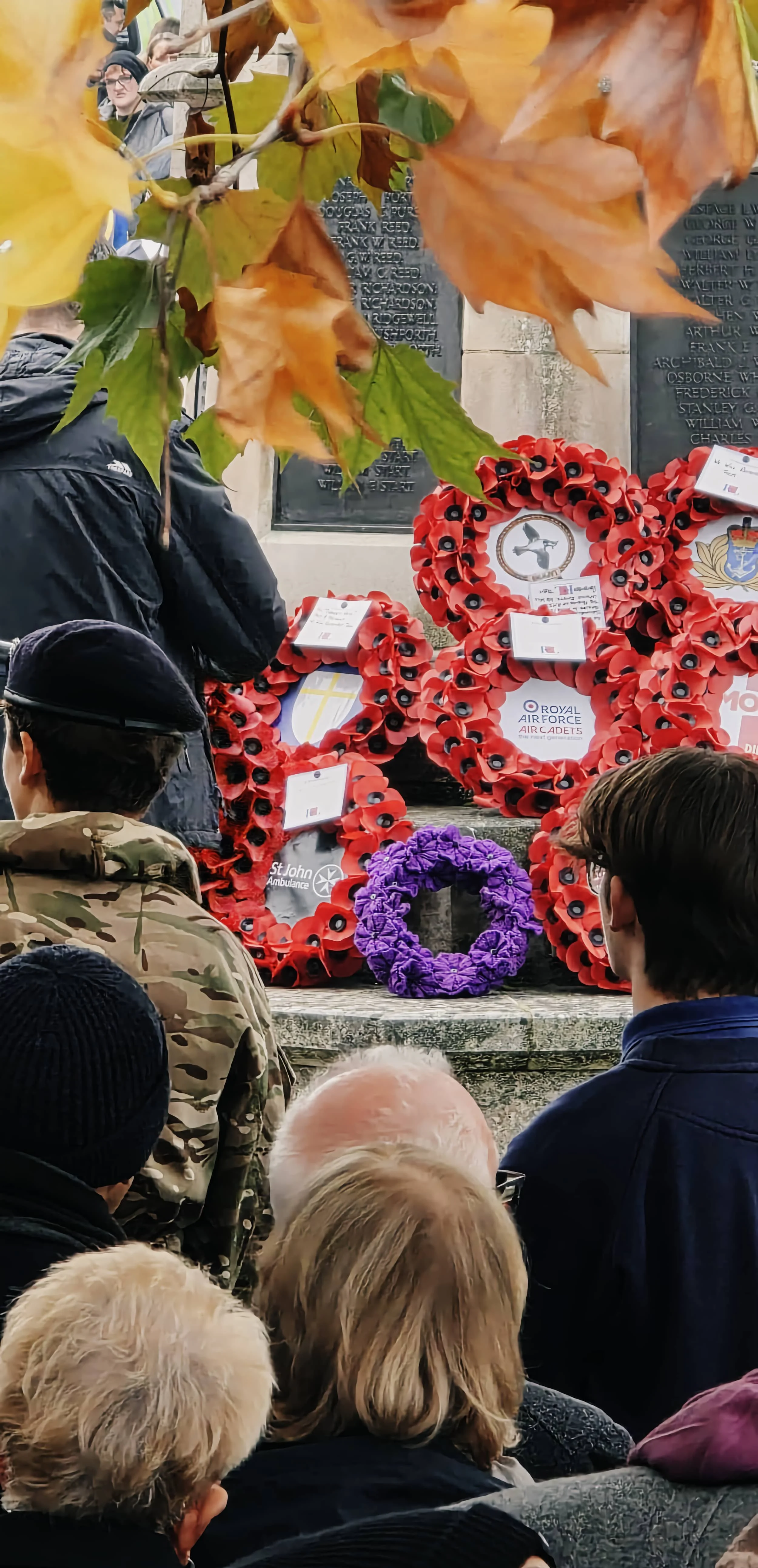
A purple knitted poppy wreath, made by our supporter Jane Hook, among the red wreaths at Saffron Waldron memorial .
Across the United Kingdom, it has been a time of remembrance. Alongside red poppies, more people have been wearing purple poppies to honour the tens of millions of animals that served alongside men and women in wartime—and the lives lost.
Armistice Day marks the moment the guns of the First World War fell silent at 11am on November 11, 1918. Remembrance Sunday, held on the second Sunday of November, extends that commemoration to all those affected by conflict. Often overlooked, that includes the animals also caught up in it, many providing an invaluable contribution to enable victory.
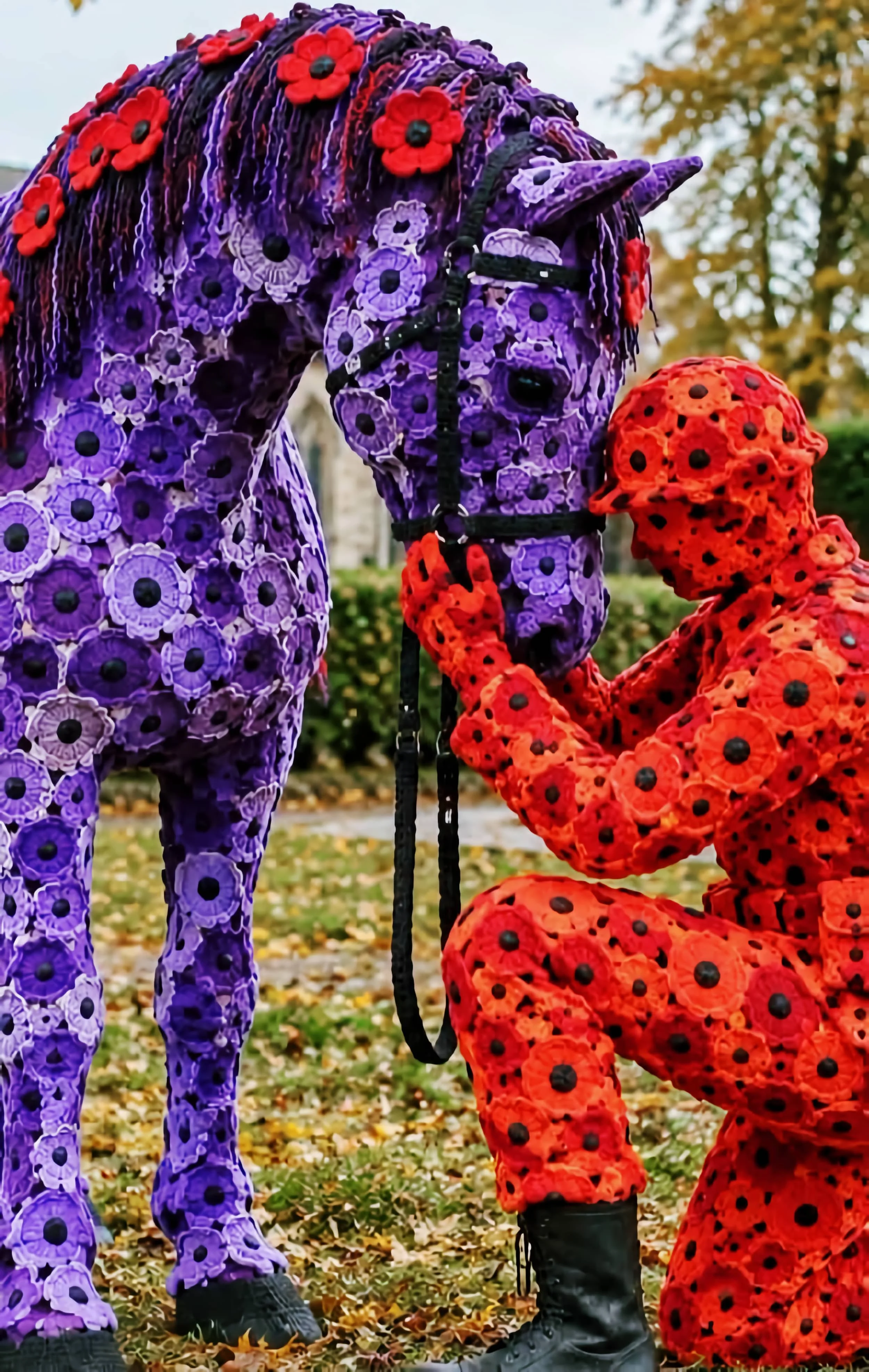
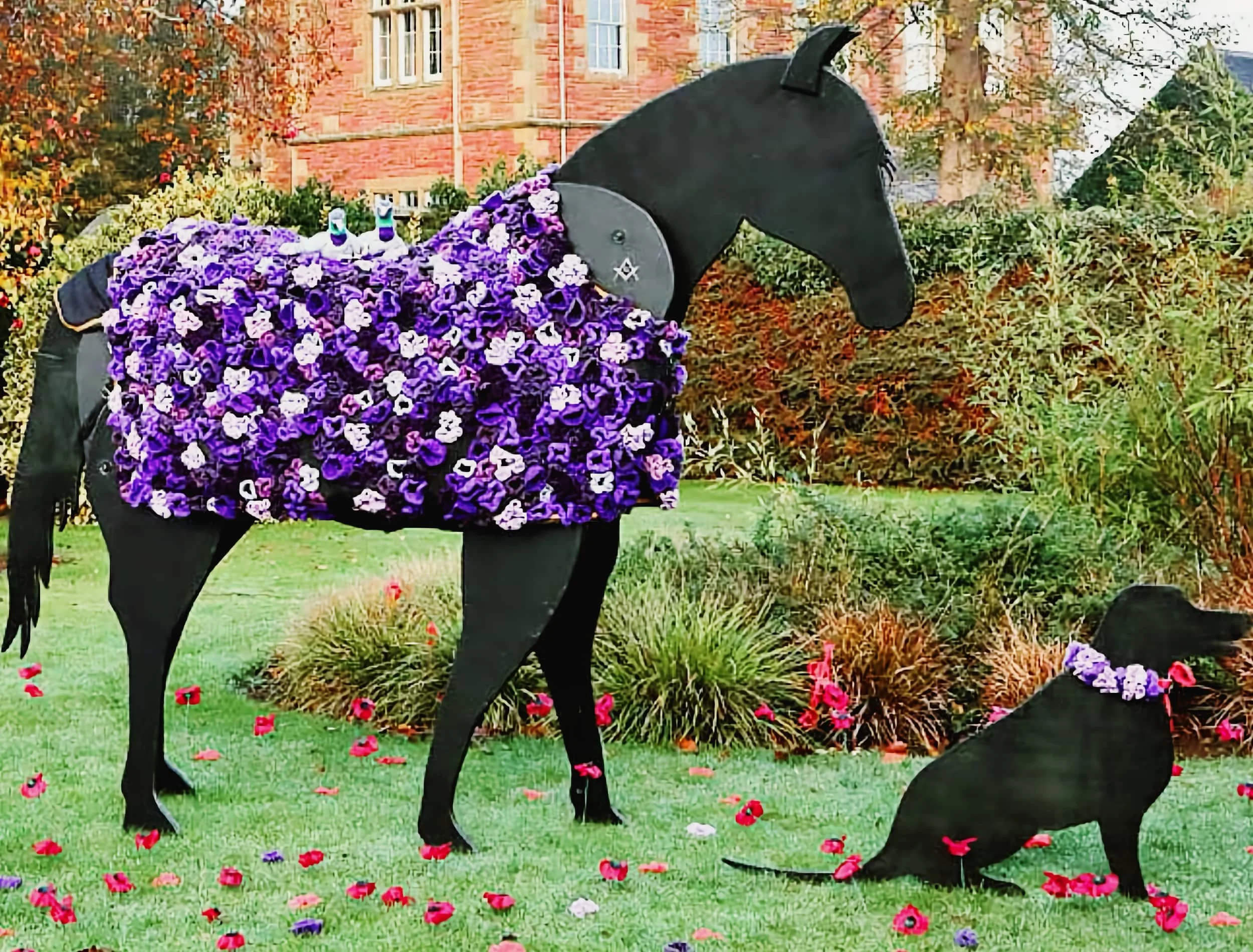
Thanks to Pam Castle in Penrith for sharing this creation of man and horse.
Horses were the unsung workforce of the First World War. They were not only cavalry mounts or officers’ chargers; they hauled artillery, ammunition, food and equipment, and pulled ambulances carrying wounded men away from the front. By 1917, the British Army had more than 368,000 horses on the Western Front.
Their work was brutal. Horses endured shellfire, gas, disease, thirst and exhaustion, often labouring close to the front line on roads shattered by bombardment. Without them, the movement of guns, supplies and casualties would have been impossible.
The toll was staggering. An estimated eight million horses died during the war, alongside countless mules and donkeys. Many were requisitioned from British farms and stables, leaving families without a working animal. In many cases, a much-loved companion. The red poppy remains the principal symbol of remembrance for those who died in war. The purple poppy exists alongside it to remember animals affected by conflict, including horses, dogs, pigeons, mules and donkeys.
Its message is simple. Horses may have shown courage and endurance, but they could not consent to military service or understand the violence around them. The purple poppy recognises their contribution and the suffering they endured.
Here at The War Horse Memorial, we have been overwhelmed by the public response to our purple poppy campaign. Sales of pin badges, wristbands and knitted purple poppies will help provide feed and medicines at sanctuaries this winter.
We asked supporters to share photographs and messages showing how they marked Remembrance Sunday and Armistice Day on 11 November. Among the images and tributes from across the countr is Jennifer Ingle, from Cumbria, who crocheted purple poppies and offered them in exchange for donations to friends and at her Loops and Leads market stall in Penrith. With only three days to prepare, she raised £34.50 and plans to begin earlier next year.
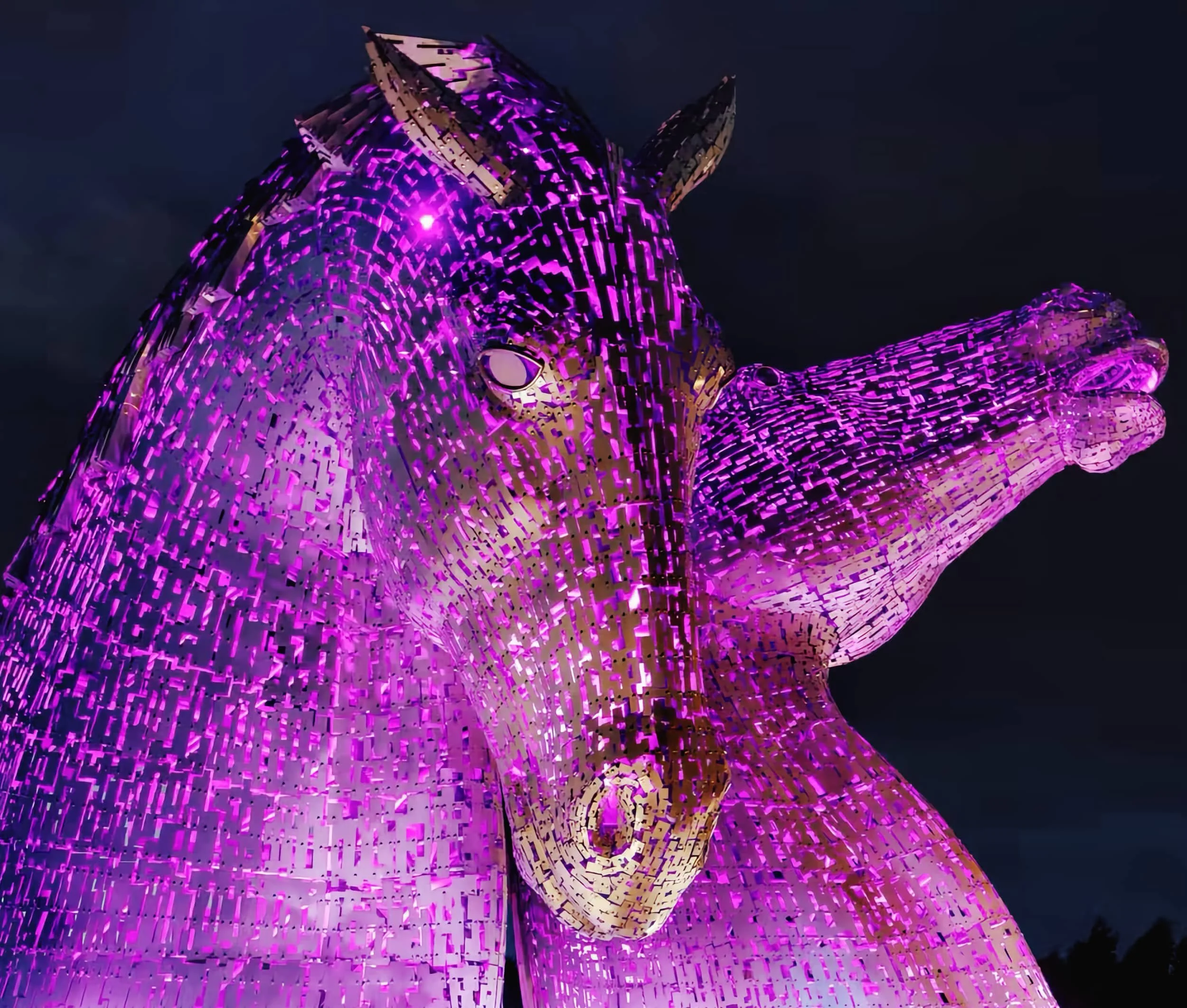
In Falkirk, Stuart Campbell shared an image of the world famous Kelpies illuminated in purple. “A kelpie,” he said, “is a dangerous shape-shifting water spirit from Scottish folklore that haunts the lochs, rivers and streams. Often the giant horse-head sculptures here in Falkirk are lit up with different colours and coincidentally it was purple, which I thought was quite poignant.”
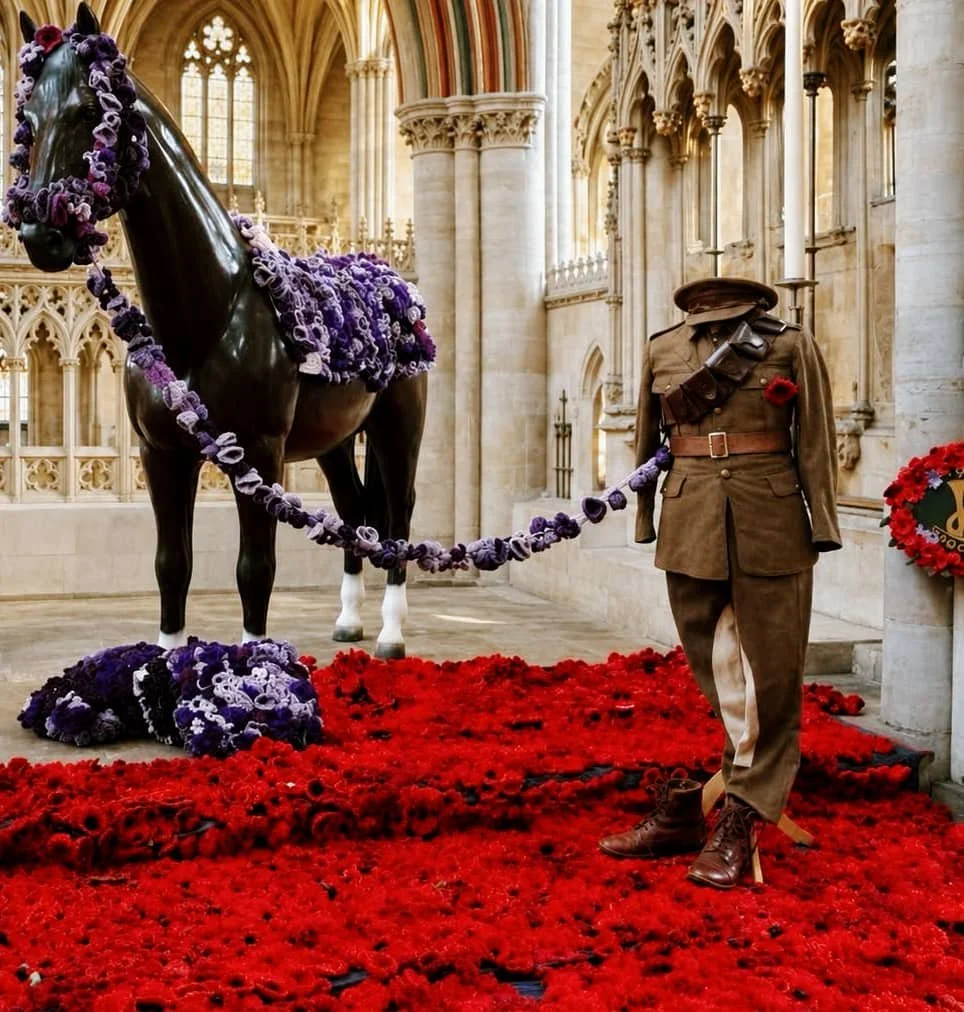
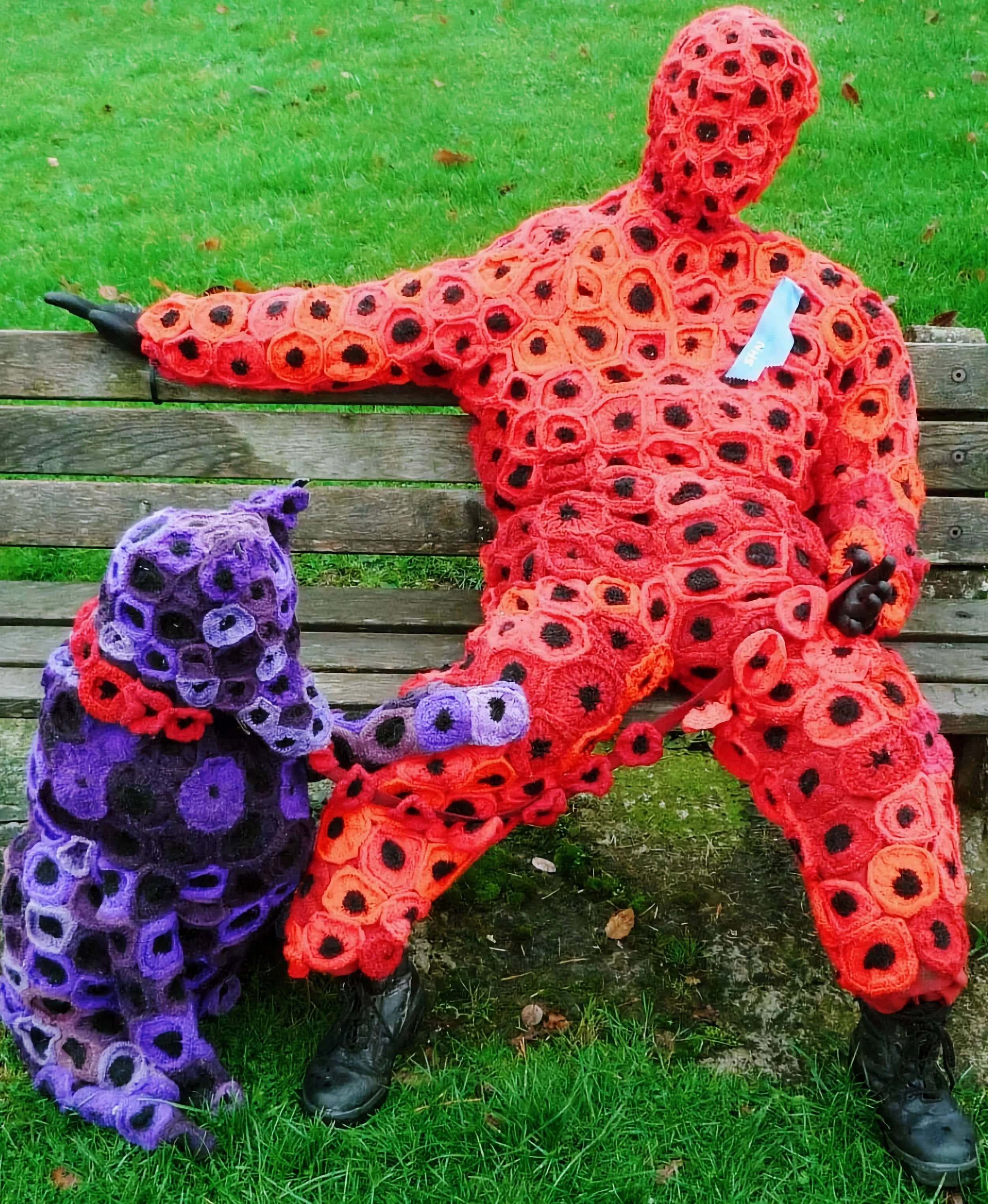
Lest we forget…soldier and horse sent to us by Peter Walford of Salisbury.
Cathy and the team at Charter Vets in Staffordshire promoted knitted poppies to customers for their pets to wear on Remembrance Sunday, raising £50. Long-standing supporter Kath Drury, from Blackpool, also sent a bag of knitted poppies for the memorial to sell, is already hard at work making some more.
That public support sits alongside a permanent tribute in Ascot, Berkshire. Our bronze sculpture, named Poppy, depicts an exhausted horse with its head bowed in mourning, standing above barbed wire—a stark reminder of the front line and the suffering endured by equines in wartime.
The War Horse Memorial stands near Ascot Racecourse on the A332 London Road. Its purple-poppy emblem links remembrance to practical support, a legacy with funds raised by our supporters helping to look after animals today.
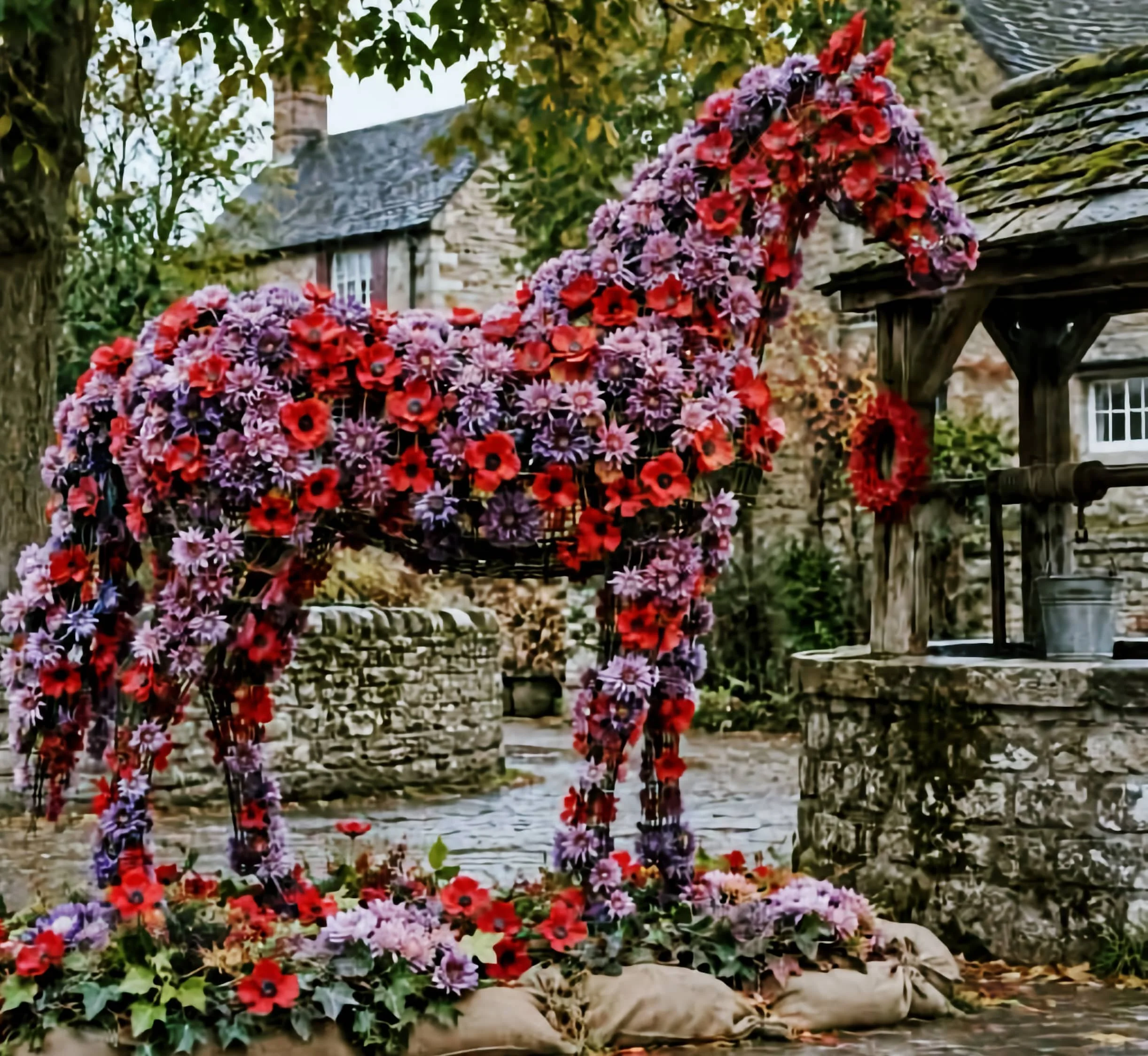
As the nation observed its respectful silence in honour of the human sacrifice in conflict, it is equally right to remember the horses whose sheer strength was a significant factor in the allies’ victory during World War l.
From knitted poppies in Cumbria to the purple-lit Kelpies in Falkirk, the response to this year’s commemorations shows that animal remembrance has a powerful place in the national act of reflection. The War Horse Memorial in Ascot ensures that the horses’ story remains visible; the purple poppy allows us to carry it with us.
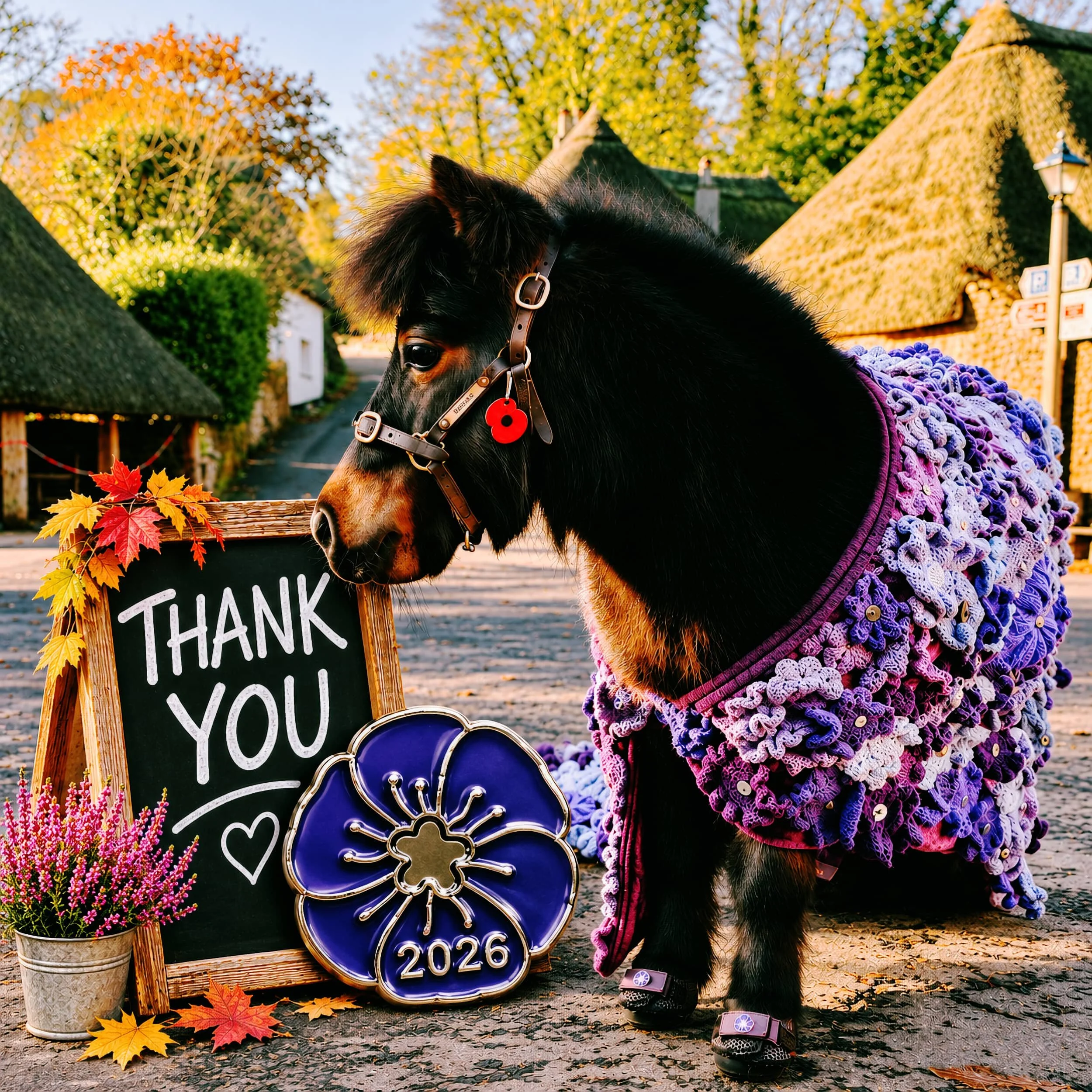
Patrick, our minature Shetland pony ambassador from Cockington, near Torquay.